The High Life, animal species

In the last blog, we investigated the conditions and constraints of living at high altitudes, generally above 10,000 feet.  A few physiological adaptations listed included enhanced breathing and blood supply to get more oxygen to the body, internal temperature regulation allowing some mammals to adjust to a colder environment, and smaller plants requiring less moisture and having a short growing season. 

Common springtail, Orchesella cincta, by Mvuijlst, Feb 2009
Springtail, Isotoma caerulea, by Andy Murray, Jul 2014

The Himalayan jumping spider, Euophrys omnisuperstes, is generally found above 22,000 feet, living among rock crevices and feeding on stray insects blown upward by rising mountain winds.  The spider also feeds on springtails, Collembola, once considered an insect but now classified as a free-ranging hexapod.  These tiny organisms have antifreeze compounds in their blood, enabling them to live in higher, colder habitats. 

Reptiles from four lizard species have been found living in higher elevations.  Two species of iguana in the genus Liolaemus live in Bolivia; a third iguana species, Liolaemus tacnae, lives in Peru; and an Asian lizard, Phrynocephalus erythrurus, lives on the Tibetan plateau.  All were found between 16,000 feet and 18,000 feet, but very little is known about them since these areas are difficult to access for study.

Golden eagle, Aquila chrysaetos, by Giles Laurent, Dec 2021; Andean condor, Vultur gryphus, by Bastihitzi, May 2013; Alpine chough, Pyrrhocorax graculus, by Jim Higham, 2008

Birds can be found living near mountain tops year-round.  The Alpine chough, Pyrrhocorax graculus, lives in social flocks from the Alps to the Himalayas.  Standing 15″ high with a 30″ wingspan, they have black feathers with distinct yellow beaks and red legs.  They eat insects and berries in summer, but have become well-adapted to scavenging in winter, especially around ski resorts.  The Andean condor, Vultur gryphus, another social bird, roosts on cliffs and outcrops above 16,000 feet.  The steep terrain provides additional protection from potential predators.  Golden eagles, Aquila chrysaetos, are found world-wide in many habitats.  In the mountains, they hunt marmot, hare, and young goats at lower elevations, but nest in eyries, large cliff-hugging nests at higher elevations.  With wingspans up to seven feet, they can dive at speeds of up to 150mph over unsuspecting prey.

Left top to bottom: Common crane, Grus grus, by Savithri Singh, Feb 2020; Whooper swan,Cygnus cygnus, by KyoichiNarukami, Japan, Jan 2012; Bar-headed goose, Anser indicus, by J.M.Garg, India, Mar 2000; Ruppell’s Griffon Vulture, Gyps rueppellii, by Lip Kee, Kenya, Aug 2008

High altitude bird species with physiological adaptations for breathing and blood supply include those whose migration routes take them over the world’s highest mountain ranges.  Ruppell’s Griffon Vulture, Gyps rueppellii, with an 8-foot wingspan, has been observed at altitudes exceeding 36,000 feet over the Ethiopian Highlands of Central Africa.  The common crane, Grus grus, lives across eastern Europe and northern Asia, migrating over the Alps to Africa, India and southern China.  The bar-headed goose, Anser indicus, and the whooper swan, Cygnus cygnus, both live in south Asia and migrate over the Alps to central and sub-Arctic Asia to breed. 

Above: Large-eared pika, Ochotona macrotis,
by Karunakar Rayker, Ladakh India, Feb 2008
Right: Snow leopard, Panthera uncia, by Vassil, Aug 2007

The heights of the Himalayas support mammals that can concentrate their hemoglobin and allow the blood to carry more oxygen, avoiding issues with hypoxia, a shortage of usable oxygen in the body.  Species with this physiological adaptation include large-eared pika, Ochotona macrotis, living above 7,700 feet up to 20,000 feet; wild yak, Bos mutus, which have larger heart and lungs than domesticated yaks; and the snow leopard, Panthera uncia, living above 3,000 feet up to 18,000 feet.  The snow leopard has short, heavily furred limbs and a long, heavy tail for use as a blanket.  Its large nasal cavity and strong chest allows more oxygen to be taken in with each breath.

Ethiopian wolf, Canis simensis, by Charles J. Sharp, Ethiopia, Dec 2017; Mountain goat, Oreamnos americanus, by Darklich14, Colorado, Aug 2009; Tibetan argali, Ovis ammon, by DonArnold, Jurica-Suchy Nature Museum, Mar 2026; Guanaco, Lama guanicoe, by Charles J. Sharp, Chile, Oct 2025; Yellow-rumped leaf-eared mouse, Phyllotis xanthopygus, drawing by Charles Darwin, 1832

Mountain goats, Oreamnos americanus, can climb steep cliff faces with hooves that grip ledges and rock surfaces in the Rocky Mountains.  The yellow-rumped leaf-eared mouse, Phyllotis xanthopygus, feeds on grains, seeds, roots, and insects in the Andean Mountains of Chile, living at altitudes to 22,000 feet.  Guanaco, Lama guanicoe, a member of the camel family, lives in the Andes up to 13,000 feet and has about four times as many red blood cells as a human does.  The Ethiopian wolf, Canis simensis, is an endangered species living up to 15,000 feet in central Africa with populations fragmented by pressure from human farming activities.  Tibetan argali, Ovis ammon, is a wild sheep found in the Altai Mountains of Mongolia up to 19,000 feet.  The ewes and lambs prefer steep, treacherous slopes as protection against predators.

Scientists continue to study species in these habitats to learn more about their specific adaptations and survival abilities in a harsh environment.  You can learn more by visiting zoos or nature museums near you to investigate these fascinating species.

Cooper’s Hawks

The Cooper’s hawk, Accipiter cooperii, is a woodland inhabitant and hunter.  In Illinois, they were state listed as endangered from 1977 to 1997.  Since then, with less pesticide use in the environment, we are seeing more of them in backyards here and across North American urban areas.

Cooper’s hawks are blue-gray on the back,  with a black cap, and a belly of white with rufous streaks.  The tail is long and  rounded with black horizontal bars.  Hooked bills for tearing, needle-sharp talons for grabbing prey, and forward-facing eyes providing good depth perception contribute to making this bird an excellent hunter.  They approach stealthily, or sit and watch, then attack with a burst of speed.  Using their tails as rudders, Cooper’s hawks are able to turn quickly and sharply when in flight, giving them outstanding chase and catch abilities while on the wing in a wooded habitat.  Chases can become intense, and several birds have been found to have cracked or broken ribs from encounters with tree branches.

Cooper’s Hawk [back], Accipiter Cooperii by Alan D. Wilson, 2010

Historically, these birds nested in woodlands with extensive canopies and ate songbirds feeding in agricultural row crops.  Many birds have moved to living in urban settings, favoring white pines and oak trees that offer good canopy coverage.  Individuals are loners except at breeding time in the mid-spring.  Males will build a simple nest, and females will lay 2-6 white eggs.  Females incubate the eggs for four to five weeks, then both parents teach the young to hunt.  Juveniles are fully independent and able to live on their own after five weeks.  Egg predation is minimal, with the average clutch losing 25% or fewer of its eggs.  First year mortality rates are high, around 70%, but drop off quickly to 30% for adults.  The average life span in the wild is comparatively long at eight years.  Many birds die from mid-air collisions with wires, autos and windows, especially in urban settings.  Birds are susceptible to a number of bacterial diseases, which may impair the birds’ abilities, but are normally not deadly.

Cooper’s Hawk juvenile on nest, Accipiter Cooperii by Alan D. Wilson, 2012

In Illinois, there are populations that are year-round residents, and there are migrating populations in both spring and fall.  Resident birds may move 50 to 150 miles for short periods depending on temperature and storms, and then move back again.  Spring migrators leave the southern parts of North America headed for breeding areas across Canada for the summer and return in fall to warmer climates.  Our best data on population numbers for this species come from the Christmas backyard bird count and individual watchers journaling their daily observations.

Cooper’s Hawk, Accipiter Cooperii by Robert Adams, 2013

Cooper’s hawks eat small to medium-size birds including cardinals, sparrows, doves, robins, and starlings.  They will also supplement this fare with small mammals such as field mice and squirrels, and other prey including snakes and toads.  With the rise in backyard bird feeding and the restoration of natural areas across the state, birds of prey and Accipiter hawks in particular have become common urban residents.  Two other Accipiter hawks that share habitat and hunting ranges with the Cooper’s hawk are sharp-shinned hawks and Northern goshawks.  These hunters may be considered a natural biological control for larger populations of birds such as sparrows and starlings, but hawks are generalists with their prey and may pose as big a danger to rare birds, as well.

Cooper’s hawks are more active in early morning hours, and they are considered one of the top daytime predators.  As you watch your feeders this winter, be aware of this opportunity to observe a skilled hunter in flight.  They are exciting to observe, sitting close up in a backyards or chasing prey through the trees.

Illinois’ Hawks

Migration is in full swing for hawk species in North America.  Many hawk species leave North America to spend the winter in Central America or South America.  October thermals, updrafts created by the sun warming the earth, provide a boost for hawks.  In northern Illinois, we can observe about sixteen species of raptors including eight hawks.

Red-tailed hawk, Buteo jamaicensis, by Sandy&Chuck Harris, 2016
Cooper’s hawk, Accipiter cooperii, by TexasEagle, 2015

Depending on the species and their breeding locations, hawks migrate from late summer in Arctic regions through autumn and early winter in the midwestern United States.  Hawks leaving breeding grounds in Arctic regions in late August arrive in Illinois six to eight weeks later after a journey of 2,000 miles or more.  Some will spend the winter here, and others will join resident hawks of Illinois and continue heading south for the winter.

Sharp-shinned hawk, Accipiter striatus, by Jerry McFarland, 2016
Red-shouldered hawk, Buteo lineatus. By Loren Chipman, 2014

There are eight species of hawks found in Illinois throughout the year.  The most common is the red-tailed hawk, Buteo jamaicensis, which is seen year-round soaring over fields or open areas hunting for prey.  Another common species is the sharp-shinned hawk, Accipiter striatus, the smallest hawk in North America.  They breed in northern Canada and winter in Central America and are notorious for raiding backyard bird feeders.  Cooper’s hawk, Accipiter cooperii, feeds exclusively on other birds in forests and woodlands.  It is hard to tell apart from the sharp-shinned hawk, but is generally larger.  Another year-round resident of forested areas is the red-shouldered hawk, Buteo lineatus.  Populations have been increasing over the last fifty years, despite the clearing of forested lands, a constant threat to the species.

Rough-legged hawks, Buteo lagopus, by Robert Pruner, 2016
Swainson’s Hawk, Buteo swainsoni, by Tom Benson, 2015
Broad-winged hawk, Buteo platypterus, by Stan Lupo, 2015

The remaining four species are less well known due to remote habitat or because they are only here during migration.  The broad-winged hawk, Buteo platypterus, breeds in deciduous forests near wetlands.  There is a small population breeding in Illinois, but it is usually observed during migration.  Swainson’s Hawk, Buteo swainsoni, also has a small breeding population in far northwest Illinois.  This bird has the longest migration  route, flying from breeding grounds in the northern United States to winter at the far southern tip of South America.  Rough-legged hawks, Buteo lagopus, are the only hawks in North America with feathers extending over their legs all the way to their toes.  They breed in the northern Arctic and winter in our area.  Northern goshawk, Accipiter gentilis, is rare in Illinois, requiring large forests with very high nest sites.  It is a fierce protector of its young, attacking any animal, including humans, who comes near the nest.

Northern goshawk, Accipiter gentilis, by Zweer de Bruin, 2017
Northern goshawk, Accipiter gentilis, by Sergey Yeliseev, 2019

Three well-known observation sites in our area provide an exciting opportunity to get out to see many of these birds, as well as other migrating species including ospreys, eagles, falcons, butterflies, cranes and dragonflies.  Volunteers record their observations daily, at each of these sites, throughout the migration season which continues into early November.  Illinois Beach State Park, near Lake Michigan and the Illinois-Wisconsin state line, averages over 5,000 raptors observed every year.  Fort Sheridan, a little farther south along the Lake Michigan shoreline, is where we are learning about how larger bodies of water affect migration patterns.  And in DuPage County, the Greene Valley Forest Preserve scenic overlook is located on the highest point open to the public.  From here, observers can see several miles on clear days over urban areas, fields and the DuPage River valley.

For more information on each of these sites, take a look at:

Greene Valley: https://www.dupageforest.org/catching-nature/greene-valley-hawkwatch

Fort Sheridan Hawkwatch on Facebook

Illinois Beach State Park: https://www2.illinois.gov/dnr/parks/pages/adelinejaygeo-karisillinoisbeach.aspx

Eagles

There are numerous species of birds that spend the winter in Illinois, but two that are infrequent visitors to northeastern Illinois can be easily seen in other areas of the state during this season.  The Bald Eagle, Haliaeetus leucocephalus and the Golden Eagle, Aquila chrysaetos.  They are both members of the family Accipitridae, which includes birds of prey that have broad wings and short tails which produce a distinctive flight pattern consisting of several short wing strokes followed by a long glide.  Members of this genus are all predators and use their talons to kill by repeatedly puncturing their prey.  They are able to stretch their long legs to keep the prey away from their head and eyes for safety.  All members of this family  have fearsome-looking, large, curved, sharply pointed beaks which are used strictly for plucking and tearing the food into bite-sized chunks.

Eagles form long-term pair bonds and both contribute to building their nests, constructed from twigs and vegetation, which are located in tree tops or on cliff ledges.  Softer, finer vegetation is used to line the nests so eggs do not drop through the twig cavities, and the vegetation provides insulation to keep the nest dry and warm.  Starting at about five feet in diameter, nests are reused over many years and may grow to nine feet or more and weigh several hundred pounds.  Eagles typically have more than one nest in an area and may move to another site if they feel threatened or they may use other nests for resting closer to hunting areas.  Eagles that migrate into the southern United States start nest construction and cleanup as early as November.  In Illinois, nest construction takes place in January and February.

Juvenile Golden Eagle by DonArnold

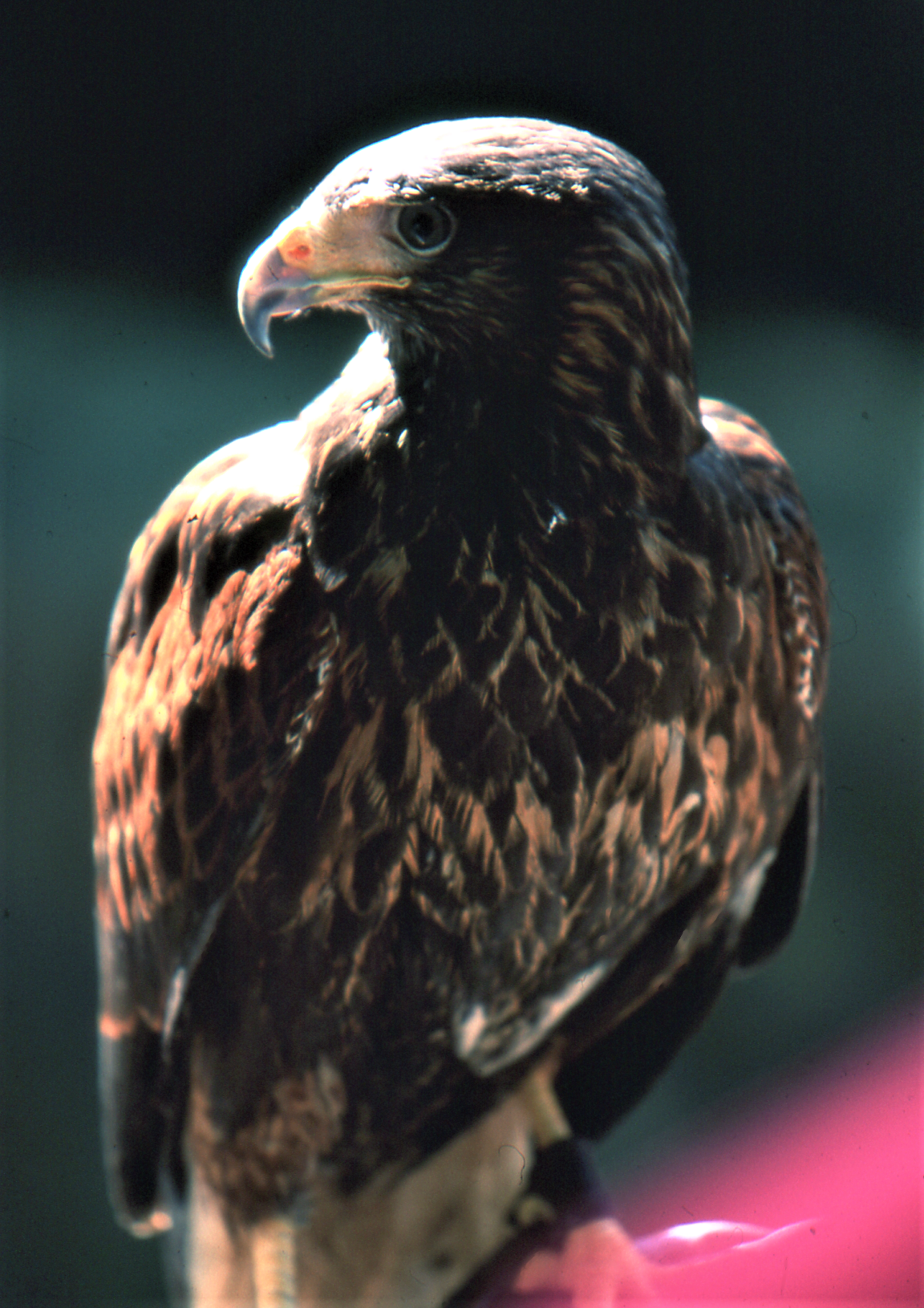
Golden Eagles are the only member found in Illinois of the group known as “true eagles”.  They are closely related to buteos, a genus of broad-winged, soaring hawks.  Their main habitat includes mountains and rugged terrain where temperature and wind conditions are conducive to creating numerous updrafts.  They have a light brown head with a dark brown body, brown wings, and a tail of light grey-brown with a dark brown band across the end.  Juveniles may have white spots under the wings in flight, making it easy to misidentify them as Bald Eagles.  Golden Eagles hunt from the air for small mammals and flying birds.  They are mostly migratory visitors to Illinois, but a small population can be found in winter in the far southern part of the state.

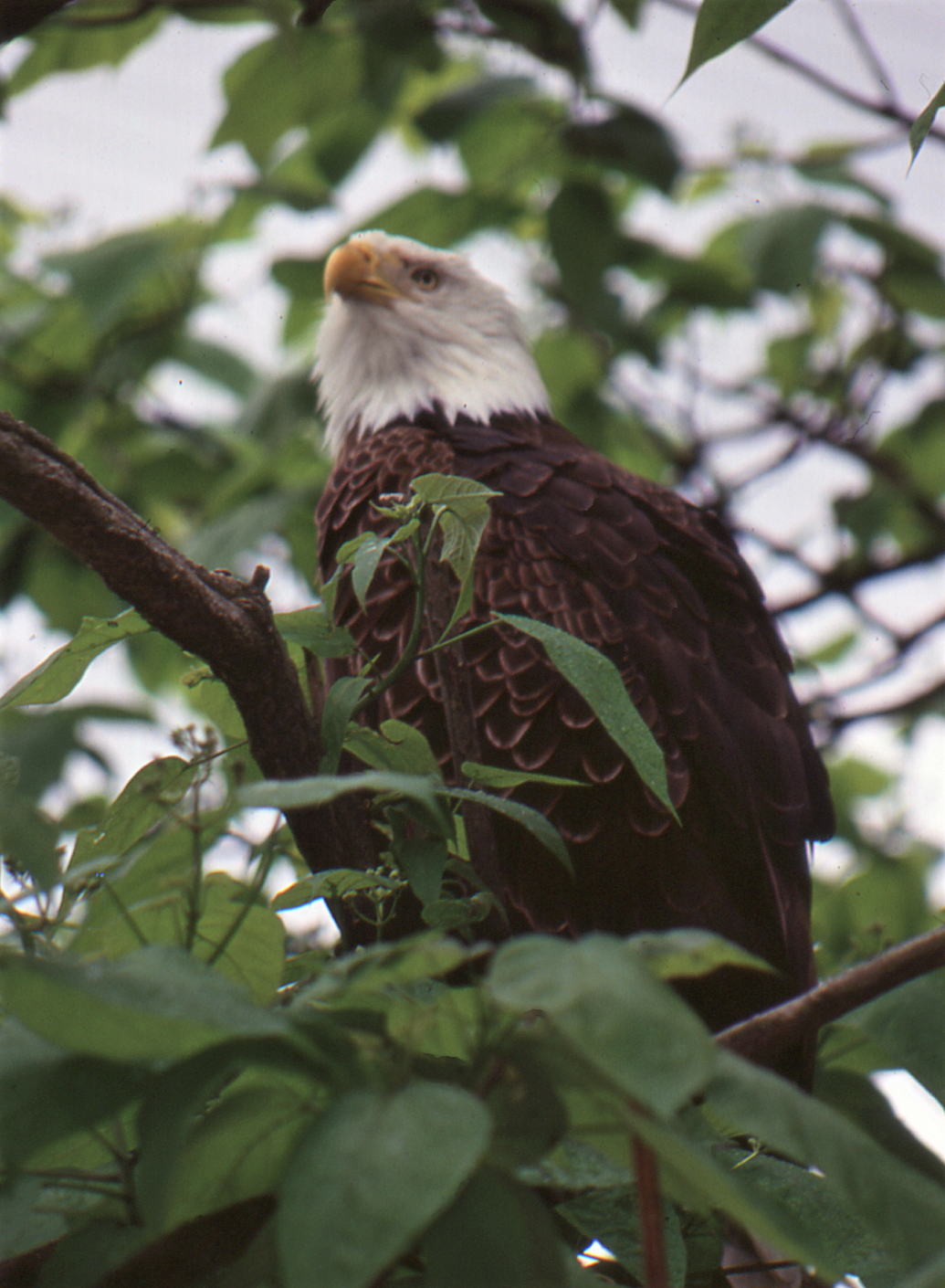
Bald Eagles are members of the group called “fish eagles,” closely related to sea-eagles on other continents, but not at all closely related to Golden Eagles.  Adults have a dark brown body with a bright white head and tail, yellow feet and beak, and pale yellow eyes.  Juveniles have a dark head with mottled brown and white bellies and do not sport the distinctive white head until they are at least three years old.  A mature adult stands about three feet tall with a wingspan of 80″-90″.  This species is found only in North America with a population of about 70,000 birds of whom half live in Alaska.  Bald Eagles are always found near large bodies of water that support the abundant fish and waterfowl they feed on. 

Bald Eagle, IA Roost by DonArnold

As rivers, streams and lakes in Canada and parts of the northern United States freeze and open water becomes scarce, Bald Eagles move southward looking for open water to support fishing.  The Illinois Department of Natural Resources estimates that there are about 3,100 eagles that reside in Illinois in winter, the largest group in the lower 48 states.  They will remain in the area throughout January and February before migrating north as more northerly bodies of water begin to open during the spring thaw.

Thousands of people enjoy eagle watching during the winter months.  The fourth Saturday in January is Illinois Eagle Day, a celebration of the Bald Eagle across the state.  According to the DuPage Forest Preserve District, there have been several sightings in area forest preserves that have large water reservoirs including McDowell Grove, West Branch, Hidden Lake and Blackwell preserves.  There are also several places along the Illinois/Iowa shores of the upper Mississippi River with great viewing opportunities.  A list of many sites and celebration activities can be found at https://www2.illinois.gov/sites/eagles/Pages/EagleWatching.aspx.

Please be aware that we can easily disturb the birds by getting too close.  Stress and our presence can change the behavior of the birds, possibly putting them in danger, especially during nesting periods.  The U.S. Fish and Wildlife Service suggests maintaining a distance of about 330 feet for the birds’ comfort.  I have been to several areas along major rivers.  Viewing from a safe distance is exciting when you can see all of the activity including where the birds are sitting among ledges, flying out over the fishing areas, swooping low to pick up a large fish and flying back to a ledge or tall tree to eat.  Consider bringing binoculars, a spotting scope, or a camera to make it a fun day.

Urban Wild

There are numerous animals in Illinois that have very successfully made the transition to living among people.  Let’s take a look at a few that can be seen in the area as well as in our own backyards.

Striped Skunk, Mephitis mephitis by Phil Myers

The striped skunk, Mephitis mephitis, has some very noticeable characteristics, yet it is one of the least noticed mammals roaming our urban areas.  Skunks have highly visible black and white stripes across their back and tail.  Skunks are omnivores, eating both plants and animals including seeds, insects, small mammals and carrion.  They are also opportunists with an excellent sense of smell allowing them to easily find pet food and bird seed put out by humans.  While searching for grubs, one of their favorite foods, skunks can cause considerable lawn damage when tearing up grass in well-watered areas.  They are nocturnal and have few natural predators.  When threatened or attacked, skunks have the ability to spray an oily musk from two glands located near the base of their tails.  A skunk can aim and spray up to ten feet, and the odor is pungent enough to be detectable up to one-and-a-half miles.  Tomato juice neutralizes the odor and may help to remove it from clothes, hair and pets.  Striped skunks are intelligent and usually good natured.  Skunks have been sold as pets in some states, although Illinois is not one of those.  They can live about seven years in the wild and up to ten years in captivity.

Red Fox, Vulpes vulpes by Kevin Castle

The red fox, Vulpes vulpes, lives in a wide range of habitats, and has been steadily moving into urban areas over the last 30-50 years.  The red fox’s preferred habitat is open woodlands, but they will also reside in urban environments, especially those that are close to forest preserves or other wooded areas.  They are omnivores, and their preferred prey includes fruit, rabbits, birds, mice and other small rodents.  Their home range is 1 to 2 square miles, with most dens found in sunny woodland areas.  Human habitation close to any wooded area such as large city parks, forest preserves or company campuses provide great hunting and feeding opportunities.  Red fox are also moving into urban areas where there is less competition with coyotes for food as well as less likelihood of themselves becoming prey to coyotes.

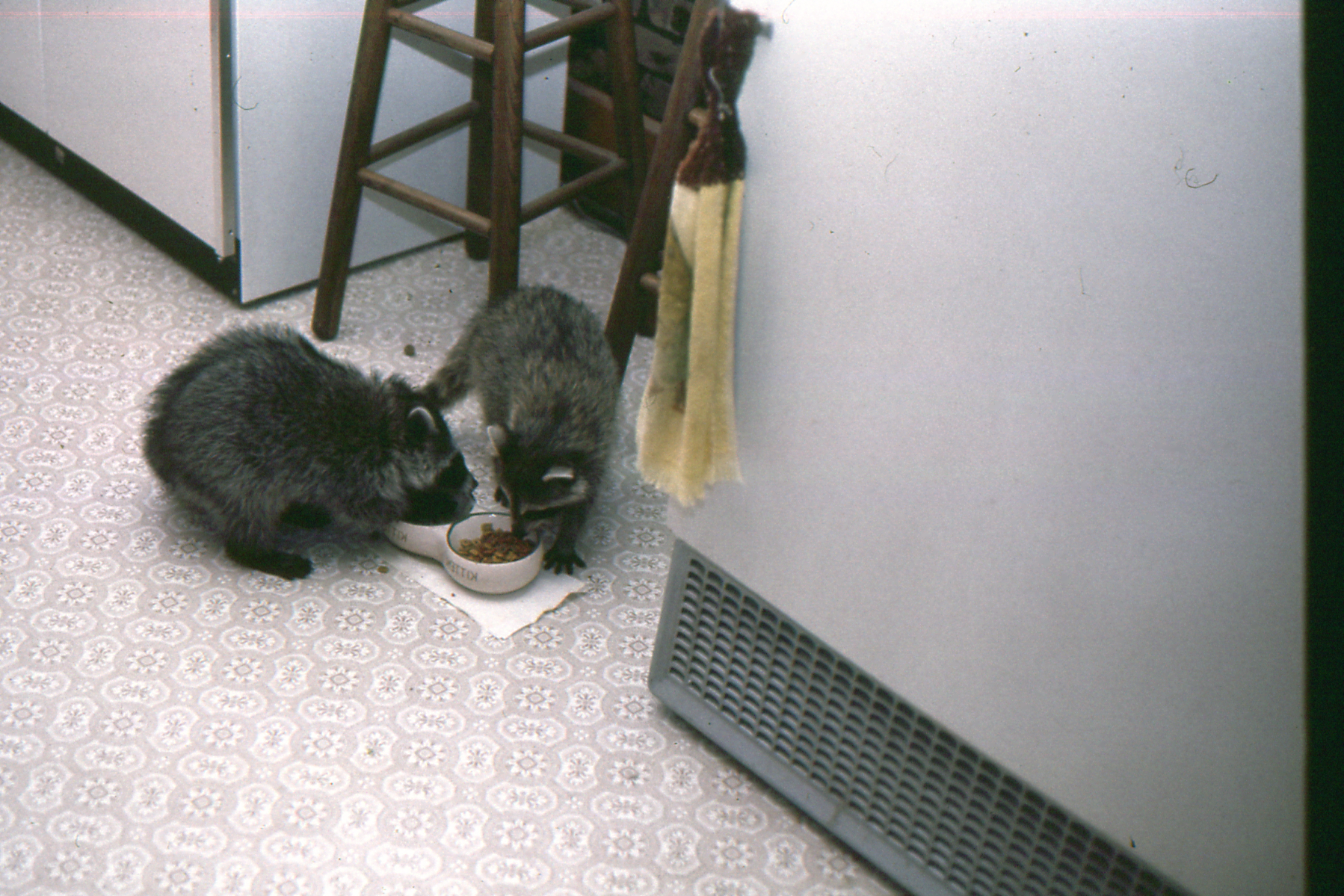
Raccoon, Procyon lotor by DonArnold

The Raccoon, Procyon lotor,  has been aggressively moving into city and suburban areas over the last 80 years.  Studies at York University, Toronto, have shown that raccoons are very intelligent animals and able to learn to avoid the many dangers and obstacles found in a human dominated environment.  They have five toes on their front paws, all of which are nimble and have great dexterity, allowing them to feel objects and learn how the object works.  Raccoons are good at puzzle solving, providing ample opportunities for opening latches, entering garages, attics and pet doors, and getting into various food containers including trash cans, pet food and bird seed containers.  They eat a wide range of food including insects, bird seed, trash, pet food, fruits, fish and bird eggs.  Raccoons are nocturnal, active at night and sleeping most of the day.  Raccoons can cause considerable lawn damage, digging for grubs and earthworms in well-watered areas.  They can also be destructive in the home garden, consuming fruits and vegetables before they are fully ripe.  Some of their favorites include corn, grapes and berries.

Bald Eagle, Haliaeetus leucocephalus by DonArnold

The Bald Eagle, Haliaeetus leucocephalus, a relative newcomer to northeastern Illinois, is found in large open patches.  Bald Eagles have been seen in great numbers in Illinois for many years, but usually they are found during winter, feeding along the Mississippi River, one of their favorite flyways and a great source of fish through the colder months of the year.  In the last twenty years, they have been observed in increasing numbers within the suburban areas of northeastern Illinois.  Nesting pairs staying throughout the year have been documented in Palos Park, Lake Calumet, and Lake County as well as several other areas with large lakes.  The many lakes and rivers in northeastern Illinois support large fish populations, providing an abundant food supply.  Eagles’ preferred nesting sites are high up, in large trees, overlooking a favorite hunting area.  There are many towns, parks and forest preserves with programs to save and preserve older trees and woodland areas, providing excellent nesting opportunities.

These are just a few examples chosen from many showing us how wild species living in this area for many years are adapting to humans.  Trees, pollinator gardens, woodlands, open spaces, lakes, ponds, marshes and streams all play an important part in meeting our need for natural areas for recreation and aesthetics.  These areas also support insects, small mammals, birds, amphibians, reptiles and larger animals, with a well-developed food chain and plenty of places to live in.  Everyone can help maintain these patches of natural area at home by creating new habitat and protecting existing habitat on their property.  Whenever you have an opportunity, work with city, county and state  officials to improve public lands for wildlife. 

Interconnected backyard habitat by DonArnold

Backyards provide year-round habitat for many smaller animals.  Many species will spend an entire season in this area when summer and winter requirements are met.  In addition, migratory species may use backyards for stopover points to rest and feed.  Trees and shrubs provide cover for protection, resting spots for migration, and housing areas for seasonal or year-round inhabitants.  Pollinator plants, trees and gardens, free of pesticides, provide a great variety of food for various species.  Clean water, a necessity for all species, can be provided in an array of different ways including ponds, birdbaths, fountains, and streams.  As more of these elements are connected together, such as several backyards comprising a larger area, these elements can provide habitat for a greater number of species for us to enjoy.

Hawks

Hawks and their allies are members of the Accipitridae family.  We have several commonly seen species in DuPage County including Cooper’s Hawk and Red-Tailed Hawk, which are year-round residents and Sharp-Shinned Hawk, a species here only in winter.  Other species that may be seen in the area include Broad-Winged Hawk, a summertime only resident, Northern Harrier and Red-Shouldered Hawk, both seen year-round, and Northern Goshawk and Rough-Legged Hawk, also here only in the winter.

Red-Tailed Hawk by Tanya Dewey

Hawks in our area are medium-sized birds, active during the day, with hooked beaks for feeding, and long, sharp talons for catching, holding and killing prey.  The Red-Tailed Hawk, Buteo jamaicensis, is often seen gliding on winds high aloft over open fields.  The  Sharp-Shinned Hawk, Accipiter striatus, and Cooper’s Hawk, Accipiter cooperii, are mostly seen zipping among the trees in open woodlands or in our backyards.

Sharp-Shinned by Steve Hinshaw

Hawks are among the top avian predators in this area.  They have excellent eyesight and can see clearly four to eight times farther than our human eyes.  As hunters in mainly terrestrial habitats, their coloring blends in with their environments.  Most are brown, grey or black, with pale underparts often streaked or barred in shades of brown.  Combining their coloration with their ability to fly very quietly, most prey are unaware of the hawk until they have already been set upon.  Hawks eat a wide variety of foods including other birds, mammals, fish, reptiles, amphibians and invertebrates. 

Coopers Hawk by Jim & Robin Kunze

Many hawks show a distinct size difference between the sexes, with the female being larger.  There is no consensus as to why this difference exists.  In birds of the accipiter group, including Sharp-Shinned Hawk and Cooper’s Hawk, the males and females will select prey of different sizes and habitats.  This allows a mated pair to find food in two different ecological niches.  Members of the accipiter group feed mostly on other bird species and are just as well adapted to chasing smaller birds through open woodland areas as they are to attacking perching birds from available cover around backyard feeders.  Species in this group have long tails to increase maneuverability, particularly in open woods and forest edges.

Red-Shouldered Hawk by Jane & Michael Pawlukiewicz

Hawks in our area all mate for life, unless a partner is lost.  All species use display flights to attract a mate, and displays may be used by either sex.  Red-Tailed Hawks are unusual in that both sexes have display flights that are started individually, but end together.  Hawks in DuPage County are solitary nesters.  They actively defend the territory that includes their nest as well as nearby feeding habitat from other hawks of their own species.  Nests are built from vegetation, mostly sticks, and a pair may have more than one nest in an area, and nests may be used for many years.  Switching among nests occurs if breeding fails or a nest is infected by parasites.  Whenever possible, fresh vegetation or pine needles are placed in the nest, possibly to provide concealment, serve as a natural coolant, reduce odor or fungal growth, or to signal that the nest is currently occupied.  Nests are further insulated with finer material to keep the occupants warm as well as to keep eggs from falling between sticks.  Nests are very important, and hawks tend to spend several weeks or months building and constantly improving them. 

Northern Harrier by Phil Myers

As egg laying time approaches in early to mid-spring, males will keep supplying nesting material, as females construct and shape the interior.  Egg laying consumes a lot of energy, so females tend to lay an egg every other day.  The number of eggs in a clutch varies from two to six depending on species and tends to increase in breeding locations farther north.  Both male and female will incubate the eggs for a period of 28 to 35 days.  Incubation starts as soon as the first egg is laid, so earlier chicks may be born first and tend to be stronger than later chicks.  After hatching, males do most of the hunting, and females spend all of their time with the chicks.  Chicks can hold up their heads, open their eyes and feed by sight within minutes of hatching.  Females will wave a bit of prey in front of each chick until the chick snatches it from the mother’s beak.  If the bit proves too big for the chick to swallow, the mother may take it back and eat it herself and start with a new bit of prey.  In the nest, chicks are very susceptible to weather changes, and females will spread their wings to protect them from both rain and hot sun.

Rough-Legged Hawk by David Mindell

In northern Illinois, the Broad-Winged Hawk migrates to Central America for the winter.  Several species from summer breeding grounds in central Canada, including Sharp-Shinned Hawk, Northern Goshawk, and Rough-Legged Hawk, migrate into northern Illinois for the winter.  All migrating species fly during the day when winds are more favorable for long distance flight.  Juveniles and adults will fly at different times and different speeds, coming together at their destinations.  Some species may flock together, but most are solitary flyers.  However, none will attempt long water crossings, tending to follow land for the whole journey.  Fall migration starts in mid-August and lasts through November, normally on days following the passage of a cold front, when the air is cooler, drier and more stable.

Northern Goshawk by Tanya Dewey

Over the past few decades, hawks have faced a number of threats including hunting, pesticides and loss of habitat.  However, they have been able to adapt well to their changing environment.  Breeding bird survey statistics indicate that most species have seen increasing populations in the past twenty years, assisted by reduced pesticide use, increased dedication of rehabilitation facilities, and better education, altering the views of hawks held by the general public.