
There are numerous animals in Illinois that have very successfully made the transition to living among people. Let’s take a look at a few that can be seen in the area as well as in our own backyards.

The striped skunk, Mephitis mephitis, has some very noticeable characteristics, yet it is one of the least noticed mammals roaming our urban areas. Skunks have highly visible black and white stripes across their back and tail. Skunks are omnivores, eating both plants and animals including seeds, insects, small mammals and carrion. They are also opportunists with an excellent sense of smell allowing them to easily find pet food and bird seed put out by humans. While searching for grubs, one of their favorite foods, skunks can cause considerable lawn damage when tearing up grass in well-watered areas. They are nocturnal and have few natural predators. When threatened or attacked, skunks have the ability to spray an oily musk from two glands located near the base of their tails. A skunk can aim and spray up to ten feet, and the odor is pungent enough to be detectable up to one-and-a-half miles. Tomato juice neutralizes the odor and may help to remove it from clothes, hair and pets. Striped skunks are intelligent and usually good natured. Skunks have been sold as pets in some states, although Illinois is not one of those. They can live about seven years in the wild and up to ten years in captivity.

The red fox, Vulpes vulpes, lives in a wide range of habitats, and has been steadily moving into urban areas over the last 30-50 years. The red fox’s preferred habitat is open woodlands, but they will also reside in urban environments, especially those that are close to forest preserves or other wooded areas. They are omnivores, and their preferred prey includes fruit, rabbits, birds, mice and other small rodents. Their home range is 1 to 2 square miles, with most dens found in sunny woodland areas. Human habitation close to any wooded area such as large city parks, forest preserves or company campuses provide great hunting and feeding opportunities. Red fox are also moving into urban areas where there is less competition with coyotes for food as well as less likelihood of themselves becoming prey to coyotes.
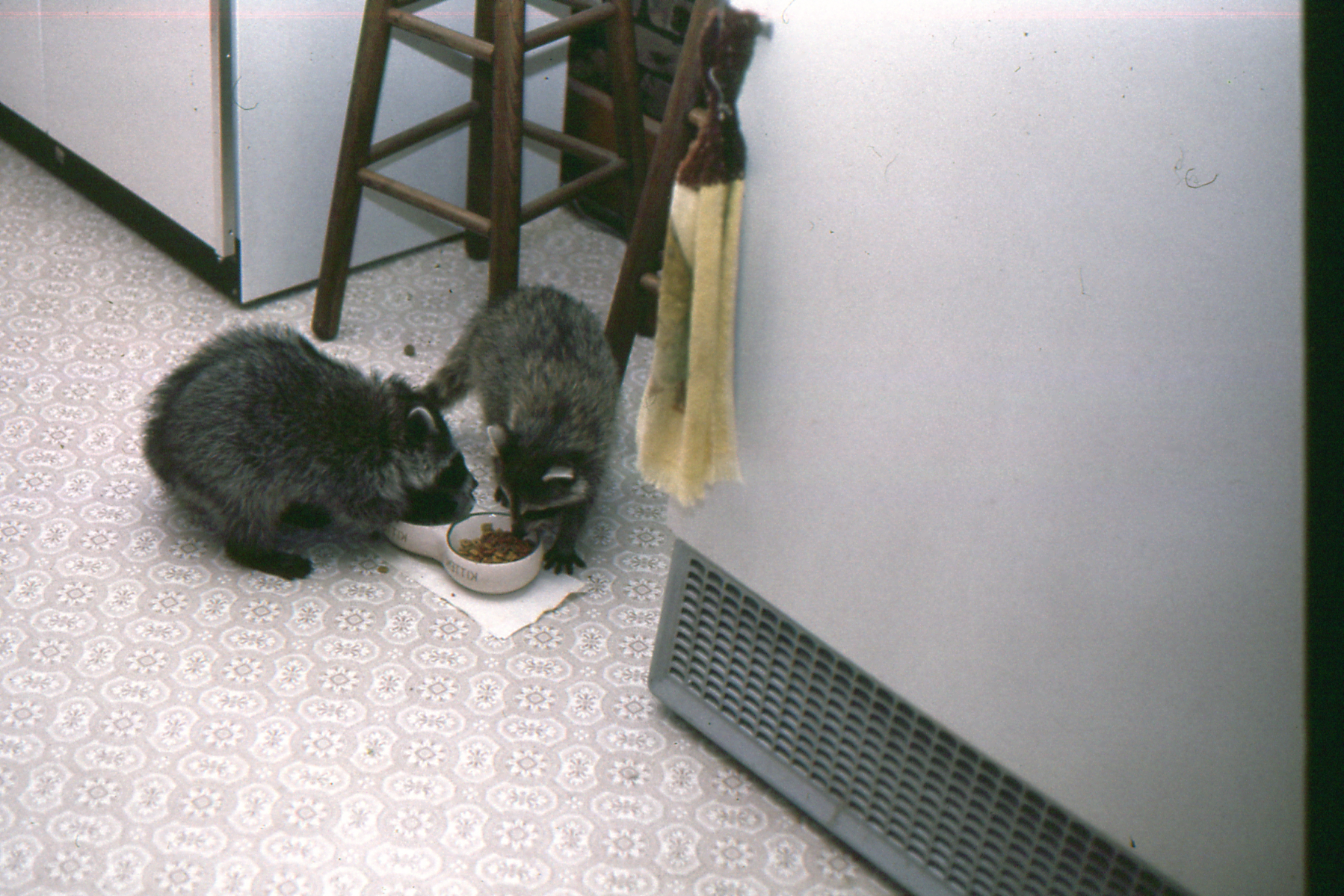
The Raccoon, Procyon lotor, has been aggressively moving into city and suburban areas over the last 80 years. Studies at York University, Toronto, have shown that raccoons are very intelligent animals and able to learn to avoid the many dangers and obstacles found in a human dominated environment. They have five toes on their front paws, all of which are nimble and have great dexterity, allowing them to feel objects and learn how the object works. Raccoons are good at puzzle solving, providing ample opportunities for opening latches, entering garages, attics and pet doors, and getting into various food containers including trash cans, pet food and bird seed containers. They eat a wide range of food including insects, bird seed, trash, pet food, fruits, fish and bird eggs. Raccoons are nocturnal, active at night and sleeping most of the day. Raccoons can cause considerable lawn damage, digging for grubs and earthworms in well-watered areas. They can also be destructive in the home garden, consuming fruits and vegetables before they are fully ripe. Some of their favorites include corn, grapes and berries.

The Bald Eagle, Haliaeetus leucocephalus, a relative newcomer to northeastern Illinois, is found in large open patches. Bald Eagles have been seen in great numbers in Illinois for many years, but usually they are found during winter, feeding along the Mississippi River, one of their favorite flyways and a great source of fish through the colder months of the year. In the last twenty years, they have been observed in increasing numbers within the suburban areas of northeastern Illinois. Nesting pairs staying throughout the year have been documented in Palos Park, Lake Calumet, and Lake County as well as several other areas with large lakes. The many lakes and rivers in northeastern Illinois support large fish populations, providing an abundant food supply. Eagles’ preferred nesting sites are high up, in large trees, overlooking a favorite hunting area. There are many towns, parks and forest preserves with programs to save and preserve older trees and woodland areas, providing excellent nesting opportunities.
These are just a few examples chosen from many showing us how wild species living in this area for many years are adapting to humans. Trees, pollinator gardens, woodlands, open spaces, lakes, ponds, marshes and streams all play an important part in meeting our need for natural areas for recreation and aesthetics. These areas also support insects, small mammals, birds, amphibians, reptiles and larger animals, with a well-developed food chain and plenty of places to live in. Everyone can help maintain these patches of natural area at home by creating new habitat and protecting existing habitat on their property. Whenever you have an opportunity, work with city, county and state officials to improve public lands for wildlife.

Backyards provide year-round habitat for many smaller animals. Many species will spend an entire season in this area when summer and winter requirements are met. In addition, migratory species may use backyards for stopover points to rest and feed. Trees and shrubs provide cover for protection, resting spots for migration, and housing areas for seasonal or year-round inhabitants. Pollinator plants, trees and gardens, free of pesticides, provide a great variety of food for various species. Clean water, a necessity for all species, can be provided in an array of different ways including ponds, birdbaths, fountains, and streams. As more of these elements are connected together, such as several backyards comprising a larger area, these elements can provide habitat for a greater number of species for us to enjoy.
Discover more from Discover-Nature
Subscribe to get the latest posts sent to your email.
