Spring Wetland Vegetation

Early spring vegetation provides egg laying opportunities & protection

In early spring, when temperatures are still cool at night and daylight hours are just starting to lengthen, most plants are just starting to become active.  Many amphibian and bird species also start their breeding activities at this time of year, and some of those depend on wetlands for egg laying sites, nesting material, food, and protection.  Wetland vegetation creates important habitat for these species.

Emergent wetland at Kino Environmental Restoration project by Desert LCC, Aug 2018

Emergent plants are non-woody species that are rooted in wetland bottoms, but grow tall and emerge above the surface of the water.  There are three categories of emergent plants that are important to pond life, including narrow-leaved emergents, broad-leaved emergents, and tall-robust emergents.  Additional plants that affect wildlife populations in wetlands include floating plants, shrubs and trees.

Common bur reed, Sparganium eurycarpum, by USFWS Mountain-Prairie, Jul 2008
Common beggar’s ticks, Bidens frondosa, by Gertjan van Noord, Jul 2020
Marsh smartweed, Persicaria amphibia stipulacea, by Tom Wilberding, Aug 2020
Blue-joint grass, Calamagrostis canadensis, at Silver Lake, Utah, by Andrey Zharkikh, Aug 2014
Water willow, Justicia americana, by peganum, Jul 2017
Horsetail, Equisetum arvense, by delirium florens, May 2020

Narrow-leaved emergent plants are grasslike, with narrow stems and leaves, and grow to less than six feet in height.  They come from the plant families that include sedges, Carex; rushes, Juncus; and bulrushes, Scripus.  Some common narrow-leaved emergents of northern Illinois are common bur reed, Sparganium eurycarpum; horsetail, Equisetum arvense; reed canary grass, Phalaris arundinacea; and blue-joint grass, Calamagrostis canadensis.  They provide cover for tadpoles and stems for perching birds to call from.  Underwater stems are used to anchor frog egg sacs, and above surface leaves are used for egg laying by several species of dragonflies and damselflies.

Spot-tailed dasher, Micrathyria aequalis, on emergent vegetation by Allan Hopkins, Dec 2012
Eggs sacs anchored on emergent vegetation by JW112211, Apr 2006

Broad-leaved emergent plants are characterized by leaves almost as wide as they are long, and they grow to under three feet in height.  Common species in northern Illinois include marsh smartweed, Persicaria amphibia stipulacea; common beggar’s ticks, Bidens frondosa; and water willow, Justicia americana.  With broader leaves, these species provide excellent protection for adult and juvenile amphibians.

Cattail marsh at Jay Meiner Wetlands by Justin Meissen, Aug 2006

Tall-robust emergent plants are 5′ to 9′ tall when mature.  Leaf and stem sizes vary greatly.  In winter, some of the plants may die back or collapse, but many species grow in tightly packed stands where portions of the plant group will survive the entire winter.  Examples in northern Illinois include narrow-leaved cattail, Typha angustifolia and broad-leaved cattail, Typha latifolia.   In addition, common reed, Phragmites australis, is a highly invasive species found throughout our area.

Tadpole under duckweed by Helena, Jun 2007

Two other groups of plants are important to early spring wildlife.  Shrubs, woody plants from 3′ to 9′ tall,  and trees, woody plants over 9′ tall.  Growing on wetland banks or in shallow water, trees and shrubs have branches and leaves that may be submerged or growing just above the surface.  These provide perches for calling species, and some may be used for egg-laying sites.  Common species in our area include blue-fruited dogwood, Cornus obliqua; silver maple, Acer saccharinum; and buttonbush, Cephelanthus occidentalis.  Floating plants only grow on the surface where there is several inches of water.  They are good indicators of water depth and the extent of open water in wetlands.  They provide cover for many underwater eggs and juveniles.  Duckweeds of the Lemna family and pond lilies in the Nuphar and Nymphaea families are common floating plants in this area.

Buttonbush, Cephelanthus occidentalis, by Jenny Evans, May 2008

Wetlands with emergent vegetation and stable water levels provide healthy habitat for bird, insect, and amphibian breeding populations.  As you are out walking this spring, be sure to look at wetland vegetation and how it is used by the wildlife populations living there.

Wood Warblers

Flashes of color accompanied by beautiful melodies

With a gray head, olive back, a yellow belly and a black chest, this species likes dense forests with berry laden shrubs.

Mourning Warbler, Geothlypis philadelphia, by Tom Benson, May 2013

It is still early spring in northern Illinois, and wood-warblers, in the family Parulidae, are starting to migrate through our area.  Noted for their bright breeding plumage, these small songbirds display a variety of colors from bright yellows to deep blues and greens with occasional flashes of orange and red.  For Spring Bird Count, always the first Saturday in May, an average of 30 species will be observed in Illinois.

With brown-olive backs, yellow bellies and throat, and a rusty cap during spring breeding, these birds like weedy fields or areas of scattered trees & shrubs
Palm Warbler, Setophaga palmarum, by Tom Wilberding, May 2019
Olive-green with white belly, yellow faces & black throats, frequenting any woody habitat
Black-throated Green Warbler, Setophaga virens, by Fyn Kynd, May 2016

Warblers migrate mostly at night, and will wait for favorable, southerly winds to fly.  During the day, they rest in tall trees, favoring oaks and willows, while feeding until the next available night for migrating.  Most species are insect eaters and require food several times during the day to supply the energy needed for migration.  Some may supplement their meals with seeds and nectar when available.

Gray backed with reddish-brown head, breast, and flanks, a black face & cream belly, this bird favors mature, coniferous forests
Bay-breasted Warbler, Setophaga castanea, by Doug Greenberg, May 2019
Bold black & white stripes with two large black spots under the tail, this species likes mixed forests & trees of all ages
Black-and-white Warbler, Mniotilta varia, by Dennis Church, Oct 2019

Warblers sing a wide variety of songs that are unique for each species, assisting in identification.  Songs are used for establishing territory and attracting mates.  Songs are mainly sung by males, although female songs have been documented.  One set of songs is sung mainly during the day for attracting mates, and they are relatively simple tunes.  A second set of songs, with a much more complex structure, is used for defending territory.  These are usually only heard early in the morning.

Gray head with bright white eyering, a green back, yellow chest, white belly & yellow under the tail, this species likes thick tangles of new growth in forest clearings
Nashville Warbler, Leiothylpis ruficapilla, by Mike’s Birds, Sep 2015
A gray head, black eye mask, yellow throat & yellow belly with black striping, these birds like young spruces in conifer forests
Magnolia Warbler, Setophaga magnolia, by Stan Lupo, May 2016

Several well-known observation spots are located in our area.  Some that you may find interesting include Illinois Beach State Park, Zion; Montrose Harbor and the Magic Hedge, Chicago; Midewin National Tallgrass Prairie, Wilmington; and Elsen’s Hill in West DuPage Woods Forest Preserve, Winfield.  You can attract them to your own backyard by planting native trees and shrubs, especially oaks.  Be sure to have a shallow dish or birdbath with plenty of water available.

Bright orange face & throat bordered on sides & top by black or gray, this species likes tall trees in coniferous forests
Blackburnian Warbler, Setophaga fusca, by Steven Kersting, May 2019
Gray head & throat, white eyering, olive back & yellow belly, found in open woods
Connecticut Warbler, Oporornis agilis, by Tom Murray, Sep 2021

Additional information is available from several online resources.  For identification of common species seen in northern Illinois, view Chicago Field Museum Field Guide 999 .  To find out what species are currently being observed and their locations, check out the Illinois Audubon Migration Dashboard .  Look for quick flashes of color among trees and shrubs, and listen for beautiful trills and melodies as you are out walking this spring.

Yellow with reddish streaks & large, black eyes, this bird forages for insects in open woodlands
Yellow Warbler, Setophaga petechia, by Gerard Cachon, Jul 2021
Gray back & head with flashes of white in wings, bright yellow faces, sides, & rumps, they like open coniferous forests & edges
Yellow-rumped Warbler, Setophaga coronata, by Mick Thompson, Mar 2021

Crocodilians, pt. 3

Crocodilians make caring parents and contribute to their habitat

Crocodilians are some of the most aggressive and fiercest predators of the animal world.  The young of all species can swim and catch food as soon as they hatch, but will continue to feed on the yolk sac in the egg for at least the first several days.  As they grow, young eat insects, snails, and frogs.  Hunting mainly at night, adults eat mostly fish, but they will also attack anything that wanders by too closely, including birds, snakes, turtles, raccoons, zebra, cattle and horses.

Baby Alligators and Everglades alligator farm by Matthew Paulson, Mar 2021
Crocodile fishing, Crocodylus porosus, by Budak, Mar 2018

Crocodilians often sit quietly and wait for prey to come to them, although they can be active hunters.  Three methods of capturing food include lunging for prey on land; leaping out of the water to surprise an animal then pulling it under the water to subdue it; and sweeping their open mouths from side to side underwater to catch fish.  Crocodilians do not have the ability to chew, but will tear off pieces and swallow each chunk whole.  Every part of the prey, including bones, is eaten.

Juvenile American Alligator (Alligator mississippiensis) resting on an adult, by Zygy, Feb 2021

Crocodilians begin mating activities when they are about eight years old.  Females tend to be a little older, and males a little younger.  Unlike many reptiles that provide no family care, female crocodilians make gentle, caring parents, protecting eggs and young, assisting at feeding times, and staying with them for their first few years.  However, there are many predators on land and in the water, and even with adult supervision, only about 10% of babies will live past their first year.

American alligator, Alligator mississippiensis, leaving pond to bask by Bob Yellow, Jun 2021
Caiman floating in lake by Ronald Woan, Jan 2018

Crocodilians inhabit warmer climates, and most live in freshwater habitats, although a few live in saltwater.  They prefer shallow wetlands offering plenty of bottom rooted vegetation that attracts prey and keeps the hunter well hidden.  Gentle banks allow them to easily crawl out on land for basking and to reach egg laying sites.  Crocodilians save energy by moving around in water instead of overland because the water supports their heavy bodies.

Gator hole by BFS Man, Sep 2013
Alligator with heron by BFS Man, Apr 2013

Many animals provide vital services in their home habitats.  Alligators dig large holes in limestone river beds, called gator holes. In hotter weather, as rivers dry up, these holes stay full of water, providing water and cool places for animals to hide from the heat of the day.  Crocodilians are great scavengers.  They keep their range clean by eating any dead animals.

Alligator foot backscratch
Alligator foot keychain

Very few species threaten adult crocodilians, and one of their biggest threats are humans.  They are hunted for their skins for clothing and jewelry, and various body parts used for medicinal purposes.  Bones are ground into fertilizer and animal feed.  Meat and eggs are used for food.  Sex organs, musk and urine are all used in the perfume industry.

American Alligator, Alligator mississippiensis by DonArnold

Habitat preservation and education about their importance is needed.  Efforts to halt illegal poaching and smuggling and enhance captive breeding and wild release are being stepped up to conserve these species.  Several farms have been started to prevent the need for crocodilians to be taken from the wild, and to generate income, via tourism, for local economies.  You can visit your local natural history museum or zoo to learn more about these amazing animals.

Crocodilians, Pt. 2

Size, snout, and teeth make crocodilians top predators

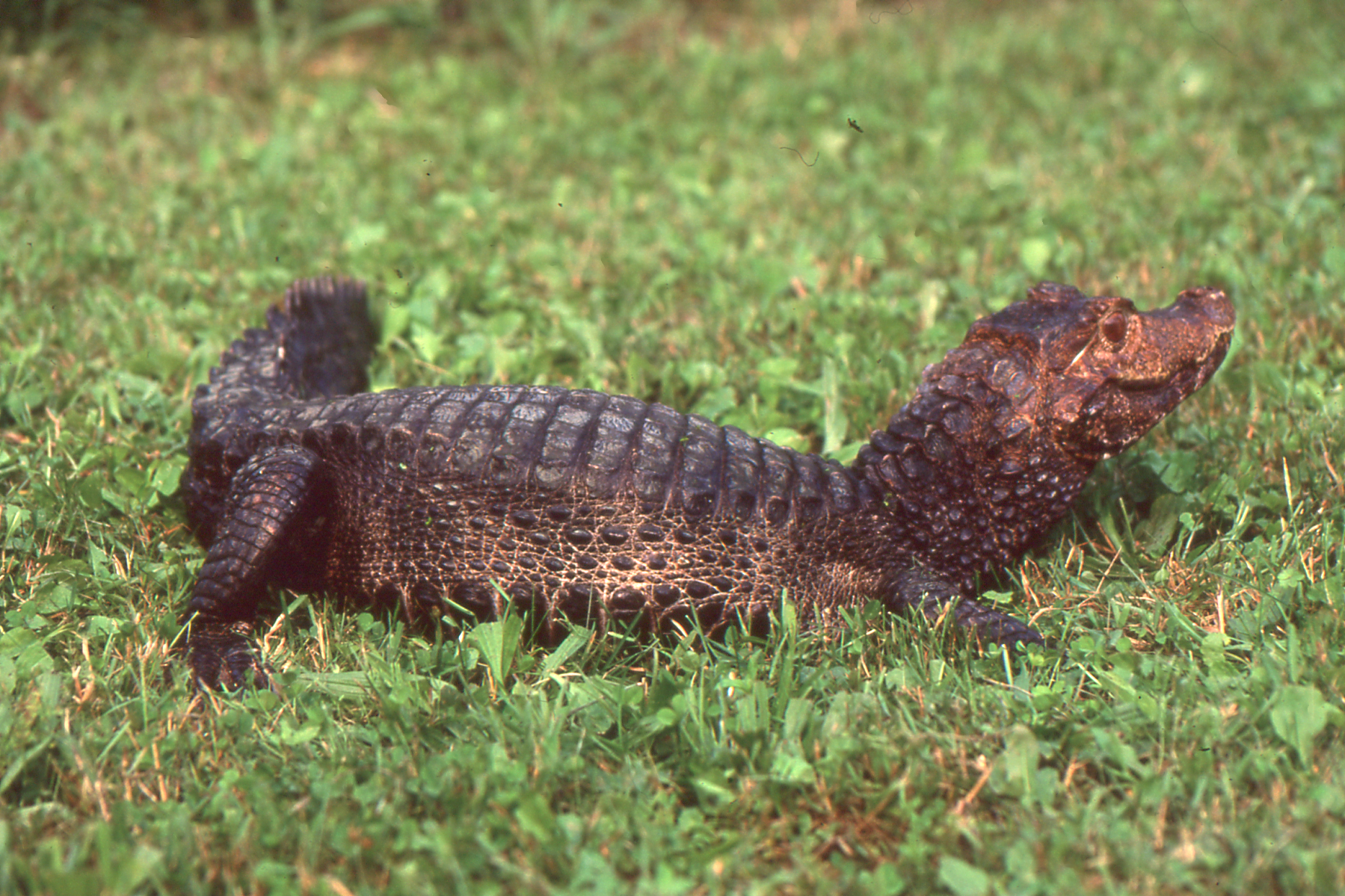
There are between 20 and 30 recognized species of living crocodilians, who, along with birds, are the only two surviving groups of Archosauria, a group that has existed for 250 million years and includes the now extinct dinosaurs.  Key characteristics of crocodilians include an elongated, structurally reinforced skull, powerful jaw muscles, young born from eggs, and parents providing extensive care to young. 

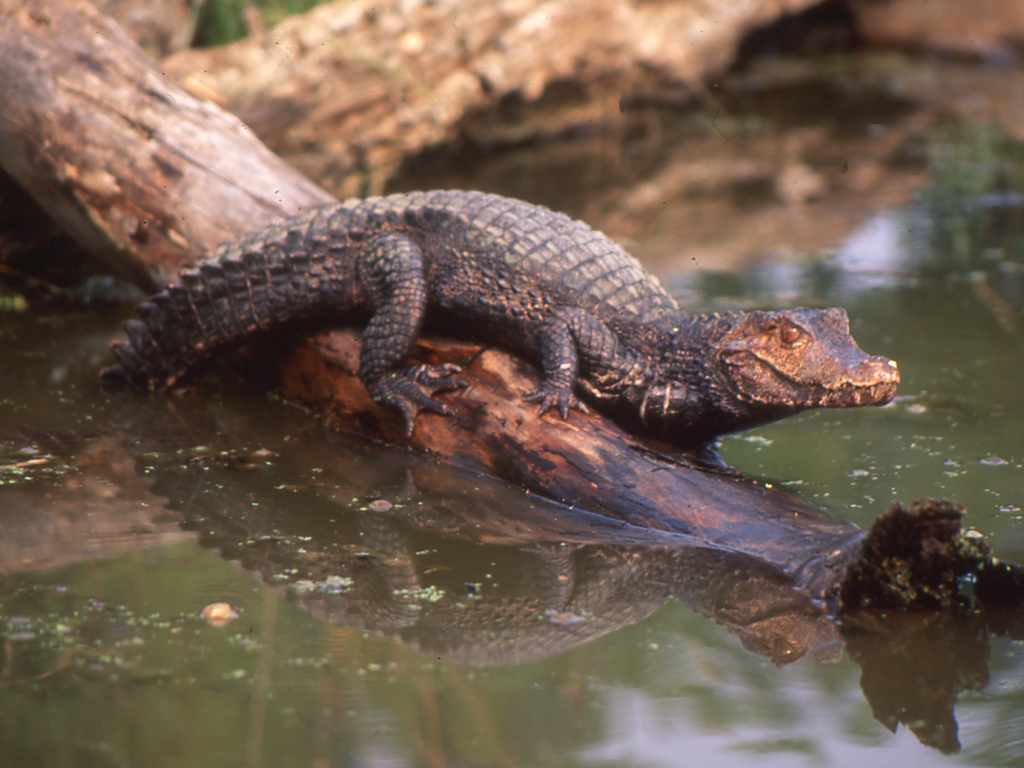
Dwarf Caiman, Paleosuchus palpebrosus, by DonArnold
Saltwater crocodile, Crocodylus porosus, by Geoff Whalan Aug 2021

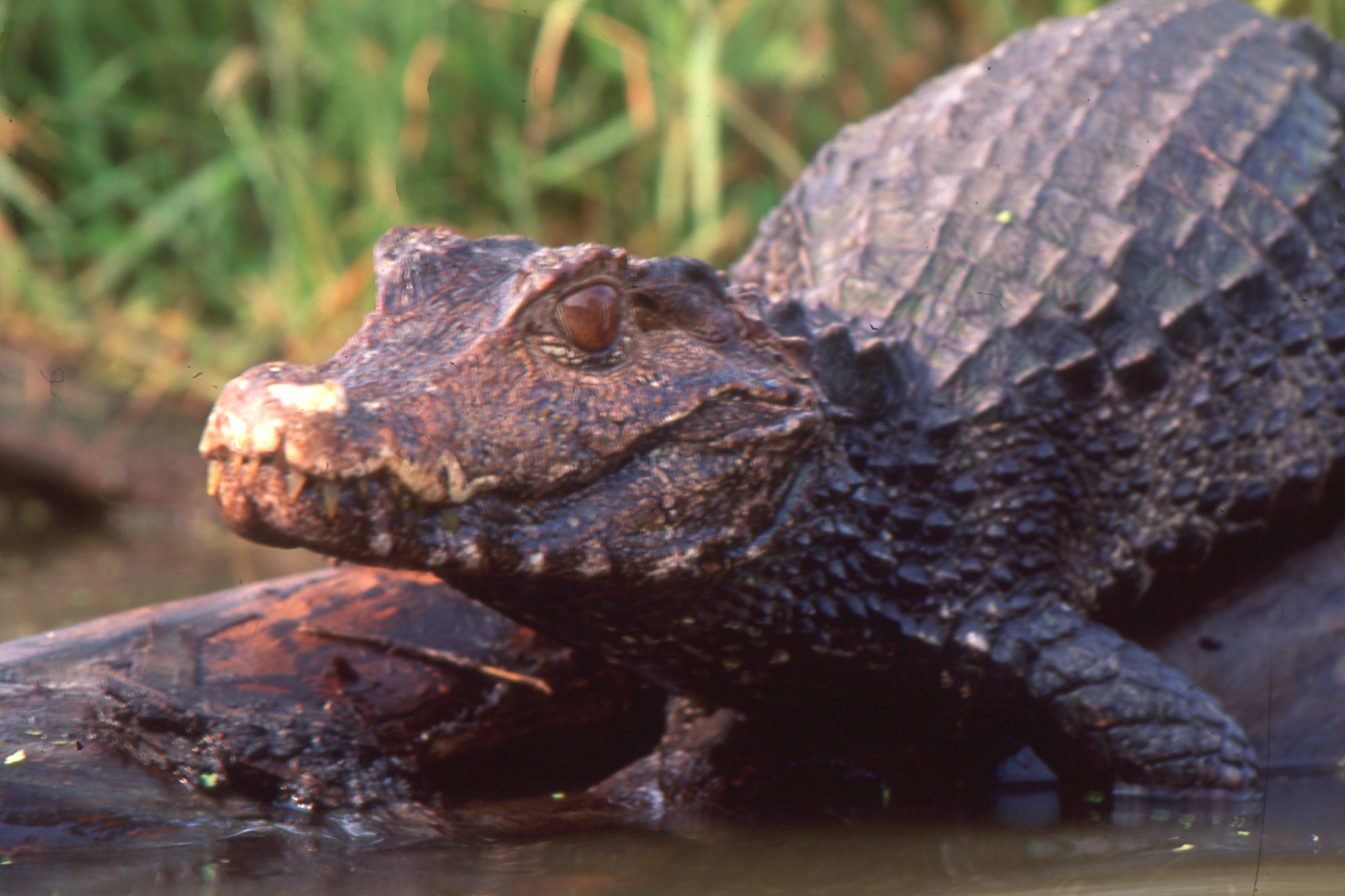
Crocodilians vary greatly in size.  Cuvier’s Dwarf Caiman, living in northern South America, is one of the smallest species averaging four feet long and weighing 13 to 15 pounds.  The saltwater crocodile, living in brackish and saltwater habitats from southern India to northern Australia, may grow to 20 feet or more, and tip the scales at close to 3,000 pounds.  For those of us in the United States, the two commonly found species include the American alligator, living along the southeastern coastal states and averaging 12 to 16 feet and 1,000 to 1,300 pounds, and the American crocodile, found only on the southern tip of Florida, growing up to 20 feet and 2,000 pounds.

Skeleton and abdominal ribs of crocodile by Lydekker, R. 1879 The Royal Natural History. Volume 5

Bone structure, like the rest of the body, make crocodilians well-adapted to living in the water.  A strong, flexible spine starts at the base of the neck and runs to the end of the tail.  Tails are used to propel them through the water, and they are able to tuck their feet close to their sides, using them as rudders.  Crocodilians may look ungainly on land, but can get around easily.  Using the high walk, the animals can lift their entire torso off the ground to walk on all four legs.  Some species can also gallop on all fours at speeds up to 11 mph for short distances.  In muddy areas and when close to water, they slide on their belly, pushing off with their legs, able to quickly move into the water.

Broad snout of American Alligator, Alligator mississippiensis, by DonArnold
Broad snout of Dwarf Caiman, Paleosuchus palpebrosus, by DonArnold
Narrow snout of gharial, Gavialis gangeticus, by Josh More Feb 2012

Crocodilian snout shape, size, and dentition is influenced by their prey and how it is caught.  Gharials and crocodiles have long, slim snouts for sweeping through the water catching fish.  Alligators and caiman have shorter, broader snouts with powerful jaw muscles to overpower birds, mammals, and other prey, some even larger than themselves.  The bite force in crocodilians is the strongest of any living animal. 

Bone and muscle structure have changed very little over the last several million years.  Space for the jaw muscles inside the skull is very large.  Strong muscles are designed to clamp the jaws shut, allowing the quick capture and killing of prey.

Depending on the species, crocodilians have between 60 and 110 teeth.  Teeth grow constantly and are replaced individually about every two years.  Worn teeth simply fall out as a new one grows in immediately.  Each animal can grow up to fifty sets of teeth in its lifetime.

Nile Crocodile, Crocodylus niloticus, trying to swallow a big Tilapia, Oreochromis sp. by Bernard Dupont Jan 2014

Front teeth are sharp for piercing and holding prey.  Molars towards the rear of the mouth are used for crushing prey.  Crocodilian jaws cannot move from side to side, a requirement for chewing, so prey is swallowed whole or in large chunks.

Crocodile teeth exposed by Derek Keats Jul 2009
Dwarf Caiman, Paleosuchus palpebrosus by DonArnold

One way to distinguish crocodiles from alligators is to look at their jaws when closed.  The fourth tooth on a crocodile is outside the jaw, fitting into a pocket on the upper lip.  Alligators and caiman exhibit no teeth when the jaw is closed.

Next week, we’ll wrap up with food, family, and conservation.

Crocodilians pt.1

Crocodilians, well-adapted to their habitats, have tough armor and excellent senses.

Dwarf Caiman, Paleosuchus palpebrosus by DonArnold

Crocodilians, a group of reptiles that have been living since before the age of dinosaurs, include alligators, crocodiles, gharials, and caiman.  For over 200 million years they have adapted to changes in their habitat and food sources.  Considered highly intelligent animals, capable of complex communication, they make attentive parents and are fierce predators.  Two hundred million years ago, before dinosaurs, these reptiles were small land animals with long legs and short snouts.  As dinosaurs took over and ruled the land, crocodilians lived in the seas.  Growing in size, some as long as fifty feet, they still hunted dinosaurs on shore.  As the age of large mammals evolved to smaller species, so did the crocodilians.  They are still considered to be some of the largest species of animals inhabiting our world, today.

American Alligator, Alligator mississippiensis by DonArnold

Gharial, Gavialis gangeticus by Josh More, Feb 2012

American crocodile, Crocodylus acutus by Florida Fish and Wildlife, Feb 2021

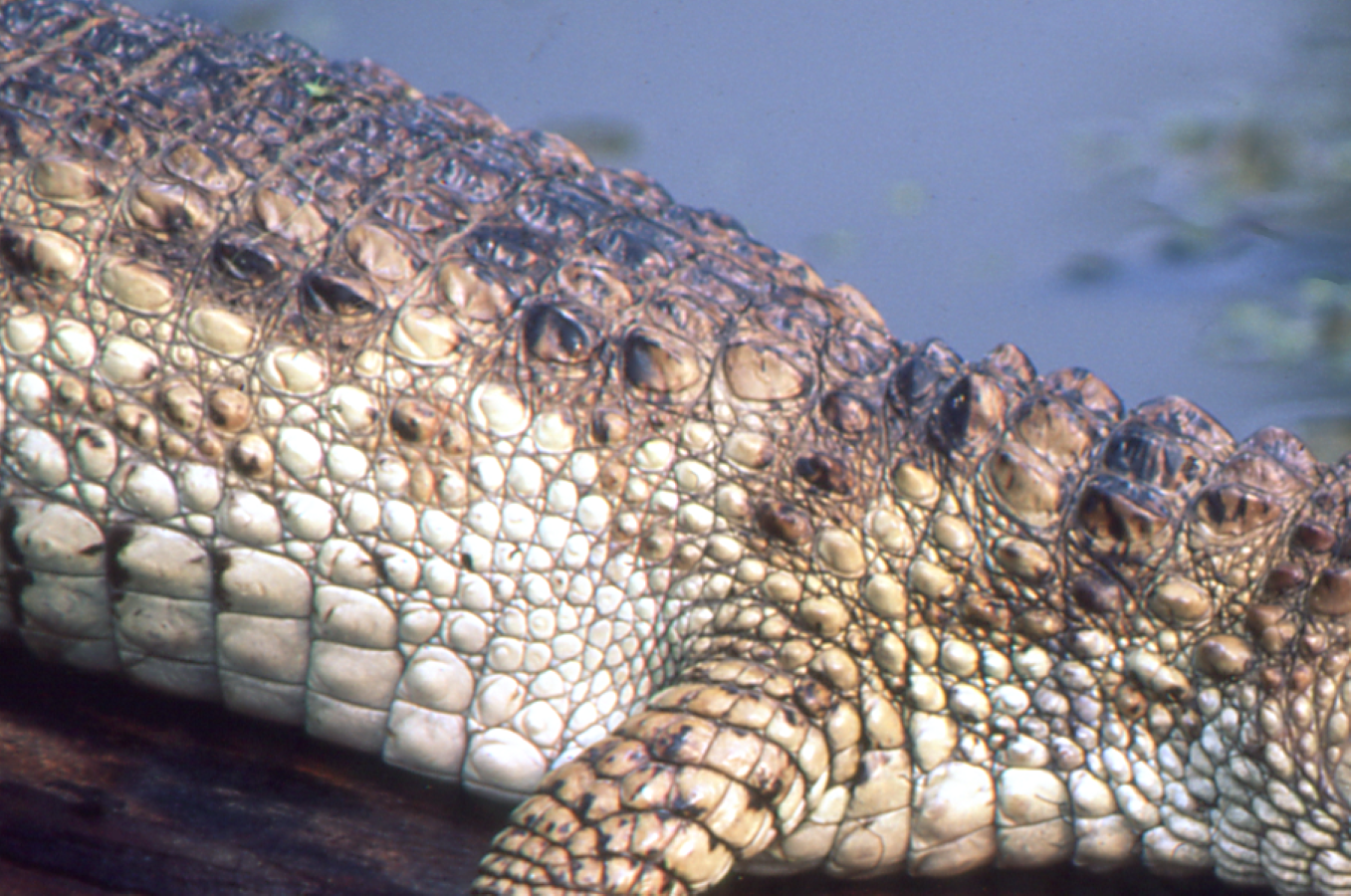
Scales cover the outer layer of skin on all reptiles.  The scales on crocodilians are called scutes.  With the density of bone, they are arranged in rows set into the thick, leathery skin.  This provides great flexibility while also creating a well-armored outer covering.  Belly scutes tend to be smooth, allowing for easier movement.  Scutes down the back are heavier and contain small bony disks for extra protection. 

American Alligator, Alligator mississippiensis close-up of scutes by DonArnold

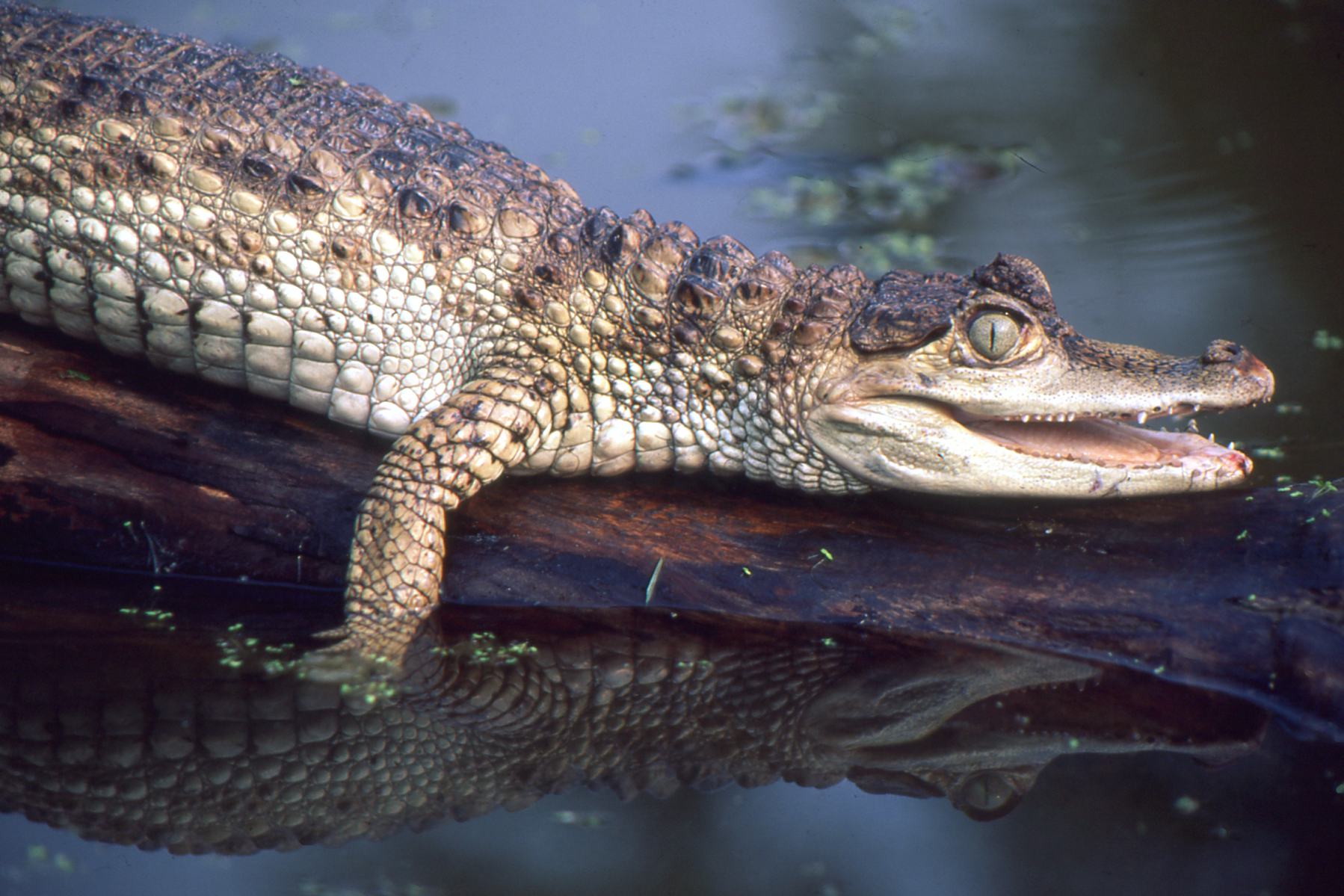
Individual scutes are replaced as old ones wear out.  A new, larger scute grows underneath the old one which falls off when the new one is fully developed.  Skin and scute coloration blend in with the animals’  surroundings.  Patterns and color break up the animal’s outline, making it harder for predators to identify them.  Most baby crocodilians are brightly colored and grow darker as they age.

Skin & scute colors help hide a Nile crocodile in grass, American alligators on a sandy shore, and saltwater crocodiles on a rocky beach.
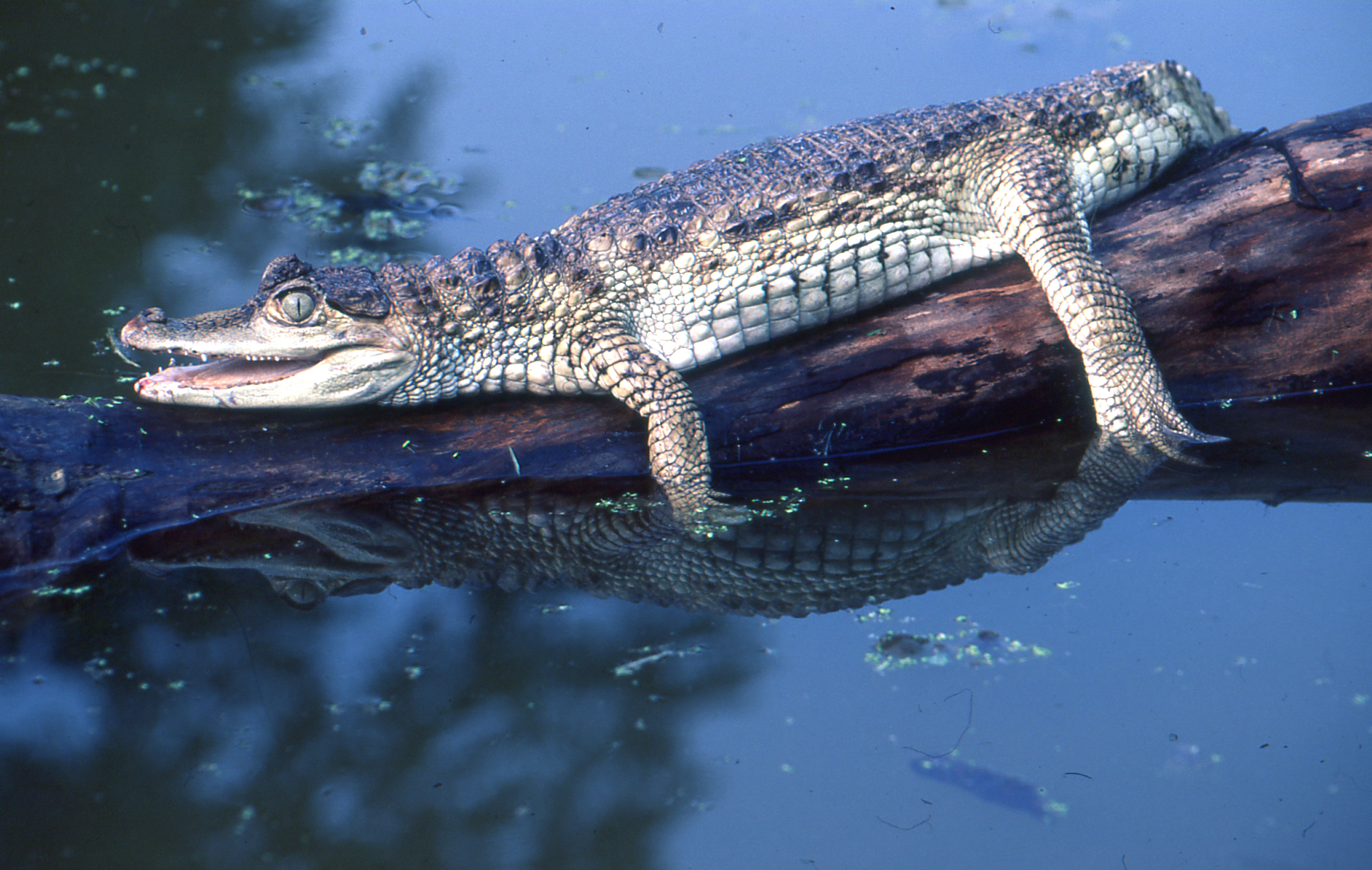
All reptiles are ectotherms, regulating their body heat from their surroundings.  As the sun rises each day, crocodilians come out of the water and head for shore to lay out and get warm.  When they get too hot, they may move to a shadier area, or back into the water.  Another popular method for cooling down is to sit with mouths agape, letting the breeze blow across the moist inner surfaces to draw out excess heat.  At night, they return to the water, which cools down slower than the land.

Caiman cooling off by Tambako the Jaguar, Jul 2012

American crocodile in mud wallow by agrego2, Feb2012

Mud wallows are another favorite place for crocodilians to spend the day.  The mud keeps the animal’s body from heating up rapidly, as well as keeping insects and parasites away from the skin.  Scutes along their tails can be flexed open to expose the skin underneath and allow excess body heat to escape.

American Alligator, Alligator mississippiensis by DonArnold

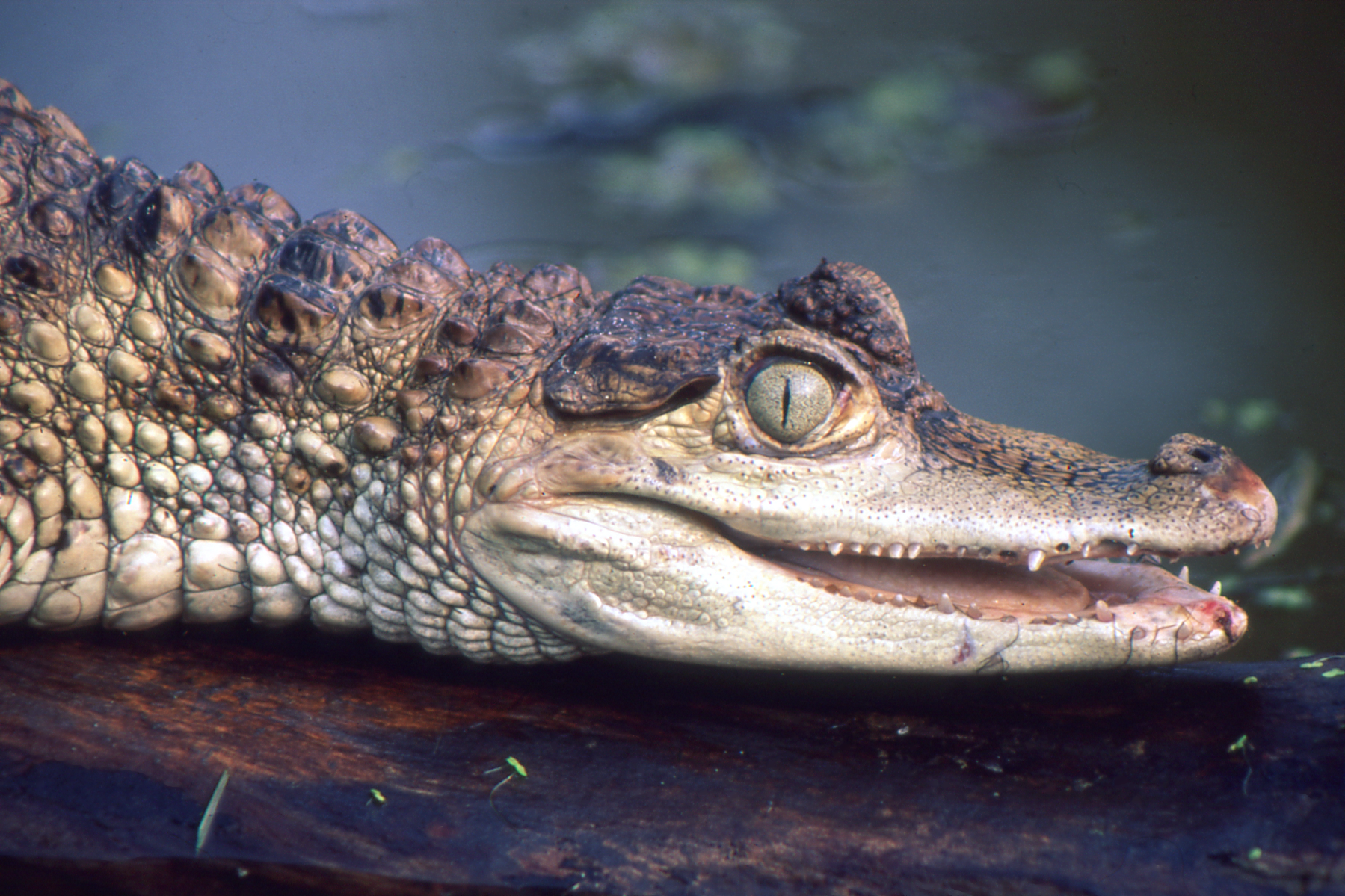
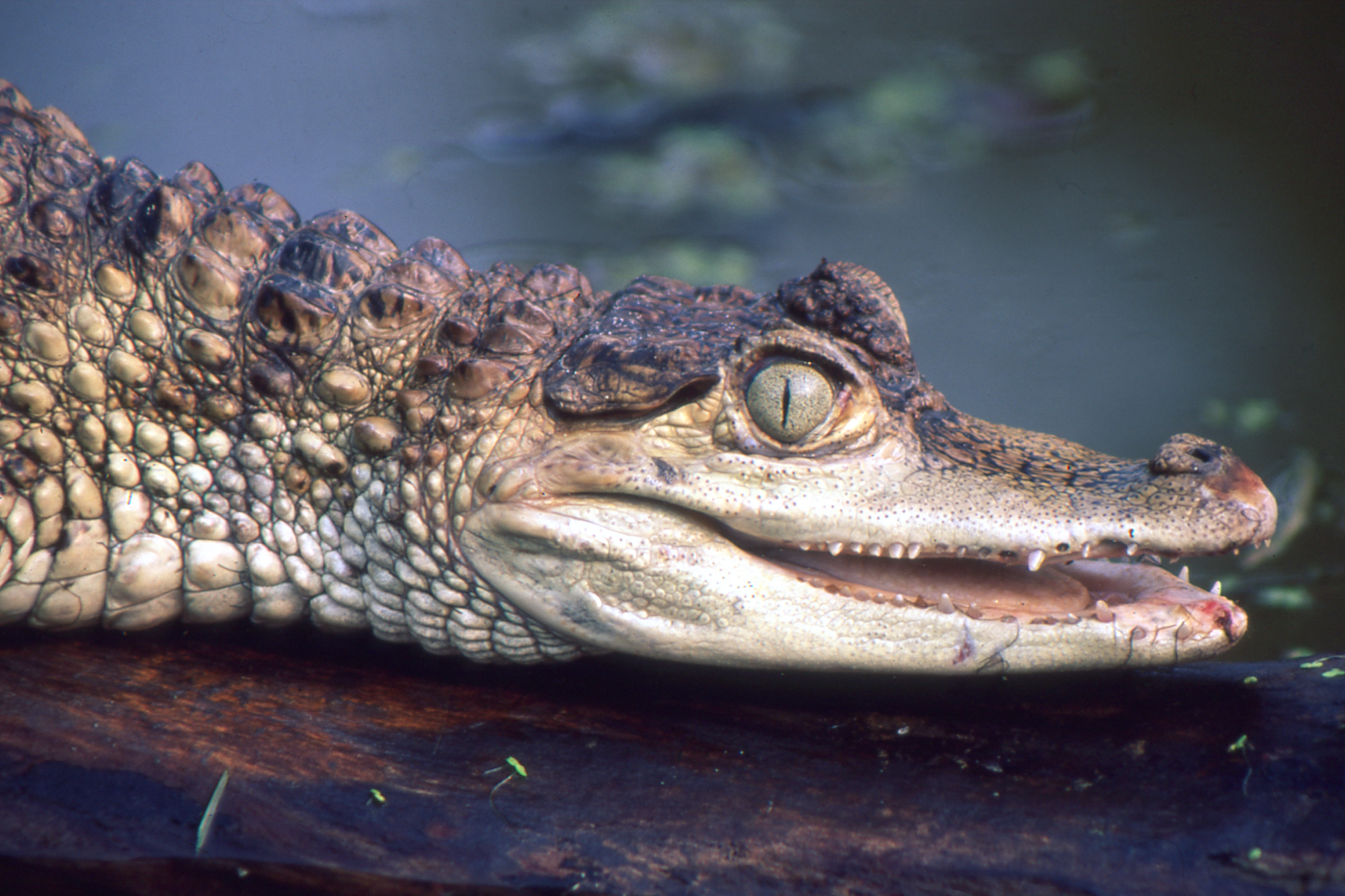
Crocodilians have well developed senses.  Eye pupils shaped as slits can be narrowed to keep bright light from hurting the inner eye.  The tapetum lucidum, a layer at the back of their eyes, reflects light forward, allowing for excellent night vision.  Immediately behind each eye is a small ear opening that is covered when swimming.  Crocodilians have acute hearing, able to detect both prey and predator from several yards away.  They can easily hear and distinguish sounds from their own young, as well.

American Alligator, Alligator mississippiensis by DonArnold

Nostrils on the top tip of their snouts allow normal breathing while swimming with most of their body submerged just below the surface.  Sensitive receptors can smell food at distances of over two miles.  Their tongues are wide and attached to the bottom of their mouths, so they are not used when catching prey.  Lined with taste buds, they can distinguish sweet, sour, and salt.  Crocodilians, especially in salt water habitats, accumulate salt in their bodies over time.  Special glands on the tongue allow them to rid this excess salt from their bodies.

Crocodilians are well-adapted to the habitats they live in.  We will investigate further aspects of these remarkable animals next week.