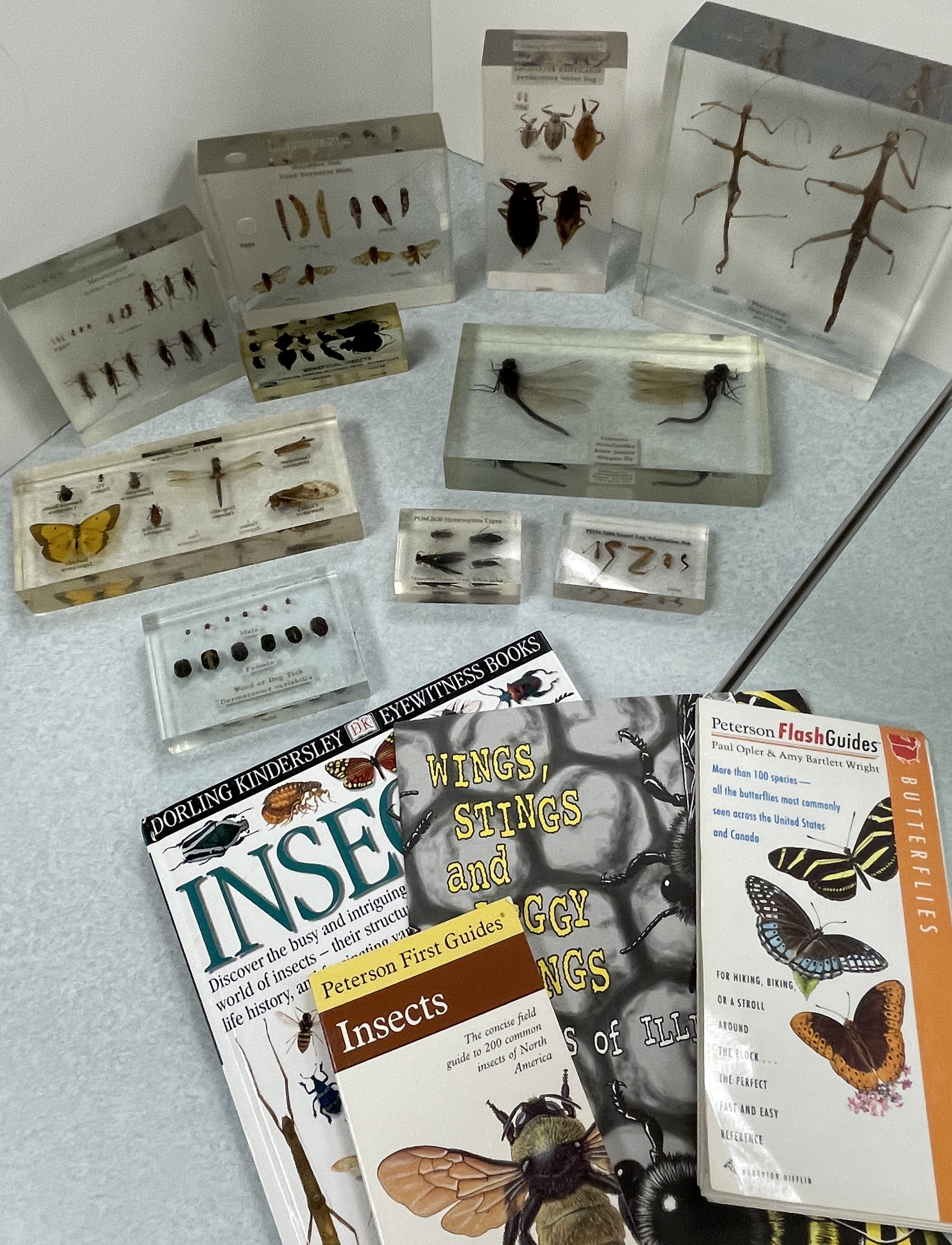
Over the past summer, Jurica-Suchy Nature Museum staff & volunteers revamped many of its Discovery Boxes. Each Discovery Box contain specimens, books, educational materials, and suggested activities to inspire K-12 students to have a deeper understanding of the world’s natural and cultural diversity.
They cover a variety of life science topics currently including:
Bat Ecology
Biology of Birds
Carnivores of North America
Dinosaurs
Diversity of Life
Fish Communities
Frogs & Toads
Human Anatomy
Insect Diversity
Ocean Life
Pollinators
Snakes
Spiders
Turtles
Wetland Ecosystems
In addition, we have 10 Illinois Department of Natural Resources (IDNR) Resource Trunks available for two-week checkouts. They are geared to Illinois wildlife and cover the following topics:
Illinois Birds
Illinois Fossils
Illinois Insects & Spiders
Illinois State Symbols
Illinois Trees
Illinois Endangered Species
Illinois Wild Mammals
Aquatic Illinois
Fieldtrip Backpacks 1 & 2
We are continuing to work on creating single box displays to highlight a specific species or theme. These life-size, complete taxidermy specimens do not come with any accompanying educational materials, but make great study specimens. They include:
Barred Owl
Immature Red-tailed Hawk
Snowy Owl & Great Horned Owl
Waterfowl – Sora, Merganser, & Ruddy Duck
Backyard Wildlife – Cardinal, Downy Woodpecker & Fox Squirrel
Homeschoolers, teachers, and education programs staff can check out any of the above items for free for a two-week period. The online form to reserve a box can be accessed by clicking here: Reserve Your Discovery Box, or on the red button of the same name about halfway down our JSNM Museum page on the Benedictine University website. They can be picked up and returned during our normal museum hours at the museum’s front desk, where we can assist you as needed. If the hours do not work for you, please do not hesitate to contact us to make alternate arrangements.
A new page showing all of the items available for checkout is being created on our outreach website at Discover-Nature.org. A complete listing of all items with detailed pictures and descriptions will be available by the end of October. Watch the website’s home page for further updates as we are developing additional educational materials to make available through the website for two-week free checkouts.
A sampling of our Discovery Boxes are pictured below:
Left to right, top to bottom: DB – Bat Ecology; DB – Birds; DB – Carnivores of North America; DB – Dinosaurs; DB – Diversity Of Life; DB – Frogs & Toads; DB – Insects; DB – Ocean Life; DB – Snakes; DB – Spiders; DB – Turtles
Of the more than 250 species of turtles in the world, 17 of them are native to Illinois. Some Illinois turtle species are found only in specific habitats, whereas others thrive in a variety of different places. Turtles are active through the warm months of the year, but all species hibernate during the winter. Illinois turtles are omnivores, feeding mostly on plants, fruit, snails, clams, and insects.
Alligator snapping turtle, Macroclemys temminckii: Lives in rivers, lakes, canals, and cypress swamps, mostly in the southern half of the state; has a red worm-like projection from its lower jaw that is used to lure fish into its mouth; Status: Endangered; UofI-AST; IDNR-AST
Turtles have a unique body structure consisting of a keratin shell, consisting of a tough fiber made of protein. Shells may be a leathery, pliable skin-like covering or a hard cover made of scutes of varying shapes and sizes that all fit together. Shells are an integral part of the body containing skin, bones, nerves, and blood vessels. Turtles lack teeth but have hard, bony jaws, and they have webbed, clawed feet that easily accommodate movement over land and through water.
Blanding’s turtle, Emydoidea blandingii: Lives in quiet water in marshes, wet meadow, or vegetation in lakes; Can move long distances overland and lives over 70 years in the wild; Status: State Endangered; UofI-BT; IDNR-BT
Turtles lay their eggs in a shallow, flat-bottomed hole dug by the female and covered with soil. Eggs hatch in about two months, and hatchlings are on their own with no parental care. Most will leave the nest immediately, except for painted turtle hatchlings which remain in the nest over the first winter, emerging the following spring. As winter approaches, aquatic species will burrow in to the bottom of a pond to hibernate, while terrestrial species will dig a burrow below the frostline to spend the winter.
Common musk turtle, Sternotherus odoratus: Most often found basking along still, shallow waters; Releases a strong, musky odor when disturbed, earning it the nickname of stinkpot; Status: Common; UofI-CMT; IDNR-CMT
There are many factors pressuring turtle populations in Illinois, as in the rest of the world. Natural hazards including predation, freezing, asphyxiation during hibernation, and drowning from flooding during hibernation. Illegal human activities include trapping turtles for food and the pet industry; both are serious problems in Illinois. Other turtles are lost due to habitat destruction from urban and farmland development, being killed by auto traffic, drowning after being caught on fishing hooks or nets, and being shot when used for target practice.
Eastern box turtle, Terrapene carolina: Found in the southern half of Illinois and likes berries and fungi; Hatchlings come out in September; Can live close to 100 years; Status: Common; UofI-EBT; IDNR-EBT
For more information on turtles in Illinois, take a look at our blog pictures or the following websites. Tips for handling wild turtles in Illinois can be found at Wildlife-Illinois. An educational poster of all Illinois turtle species is available from Illinois IDNR at Wild-About-Turtles. Click on UofI-xx or IDNR-xx links with each picture to learn more.
Eastern mud turtle, Kinosternon subrubrum: Lives in bottomland forests along rivers and streams in the southern one-third of Illinois; Status: Common; UofI-EMT; IDNR-EMTNorthern map turtle, Graptemys geographica: Prefers slow moving backwater in rivers and lakes; A shy turtle that will dive into water at the slightest provocation; Status: Common; UofI-NMT; IDNR-NMT
False map turtle, Graptemys pseudogeographica: Likes slow moving water with muddy bottoms and lots of basking opportunities; A very shy turtle that will dive into the water at the first sign of disturbance; Status: Common especially along the Illinois and Mississippi Rivers; UofI-FMT; IDNR-FMT
Painted turtle; Chrysemys picta: Likes shallow, weedy wetlands; Often observed basking quietly in large numbers on logs along shorelines and in shallow water areas; Status: Common; UofI-PT; IDNR-PT
Ouachita map turtle, Graptemys ouachitensis: Lives in rivers with sandy or gravelly bottoms; Often found in large groups basking in the sun on logs along river banks; Status: Common, especially along the Illinois and Wabash Rivers; UofI-OMT; IDNR-OMT
Red-eared Slider, Trachemys scripta: Lives in quiet waters with lots of vegetation and muddy bottoms; Status: Common; UofI-ST; IDNR-ST
Spiny softshell turtle, Apalone spinifera: Lives in still waters with sand bars or mud bars; Readily bites when disturbed, delivering a painful wound from sharp-edged jaws; Status: Common; UofI-SpST; IDNR-SpST
River cooter, Pseudemys concinna: Likes slow moving backwaters from large rivers and reservoirs; Status: State endangered; UofI-RCT; IDNR-RCT
Smooth softshell turtle, Apalone mutica: Live in clean rivers with sandy bottoms; Their leathery skin, lacking, scutes make them appear as a flat pancake laying on the sand; Status: State threatened; UofI-SmST; IDNR-SmST
Snapping turtle, Chelydra serpentina: Likes any wetland; aggressive on land, but calm in the water; heavily exploited for human food; Weighs up to 85 pounds; Status: Common; UofI-SnT; IDNR-SnT
Yellow mud turtle, Kinosternon flavescens: A small turtle found only along the Illinois and Mississippi river corridors; most of its habitat has been destroyed by locks and dams or agricultural conversion; Status: State endangered; UofI-YMT; IDNR-YMT
Ornate box turtle, Terrapene ornata: Found in prairies or open fields and lives up to 30 years; Status: State threatened; UofI-OBT; IDNR-OBT
Spotted turtle; Clemmys guttata: Likes shallow wetlands found in or adjacent to prairie; A small turtle found only in the northeastern corner of the state; Status: State endangered; UofI-SpT; IDNR-SpT
To learn more about the following species or topics, click on the name to link to a previous blog: